
Location IDP Camp No-3. In Sudan Ad-Damazin, Blue Nile Region.
Duration 10 Jun to 10 Jul 2026
Submission Date: 9 Jul-2026
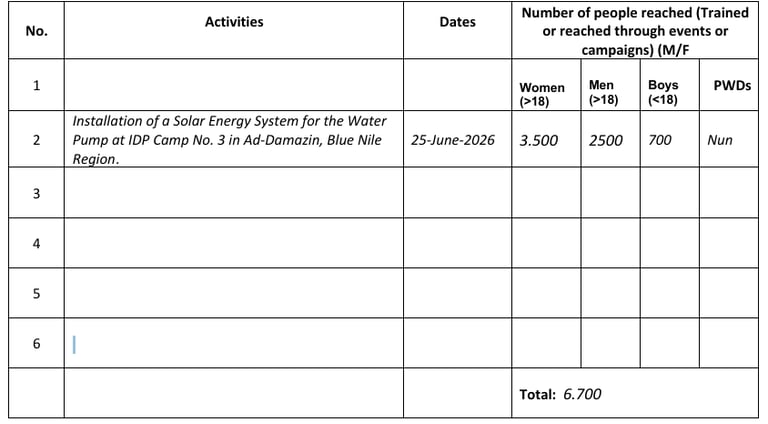
1- Activities Completed
Challenges, Lessons Learned, and Success Stories Organizational Background
Partners for Peace (P4P) has been actively engaged in emergency response activities in the Blue Nile Region for more than a year. During this period, the organization has worked closely with Emergency Response Rooms and local humanitarian actors to address urgent community needs and strengthen community resilience through practical, locally driven interventions
Project Implementation and Impact
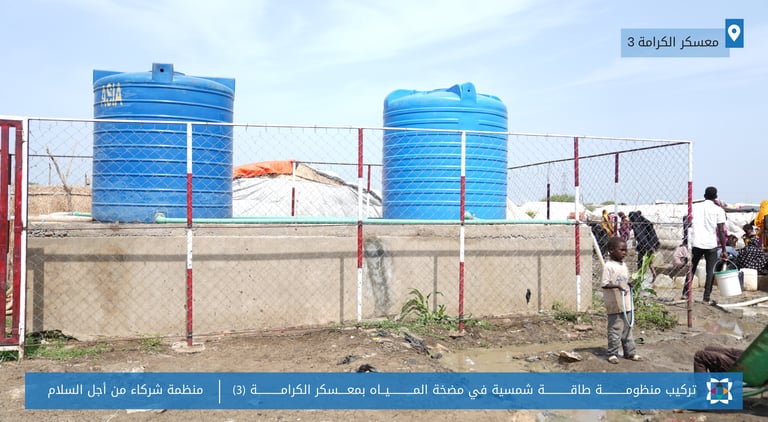
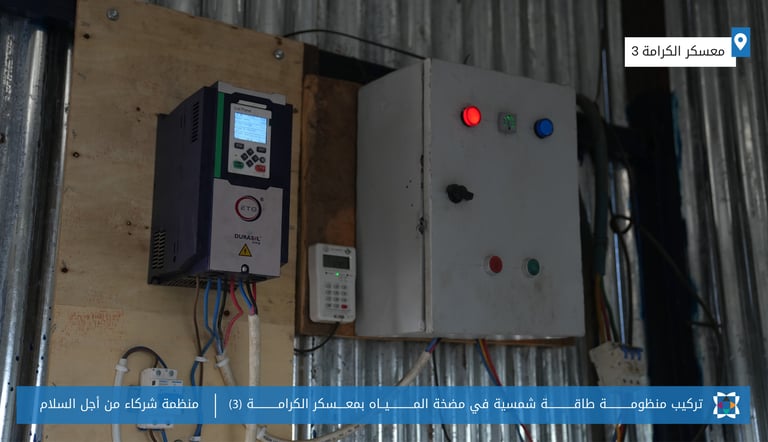
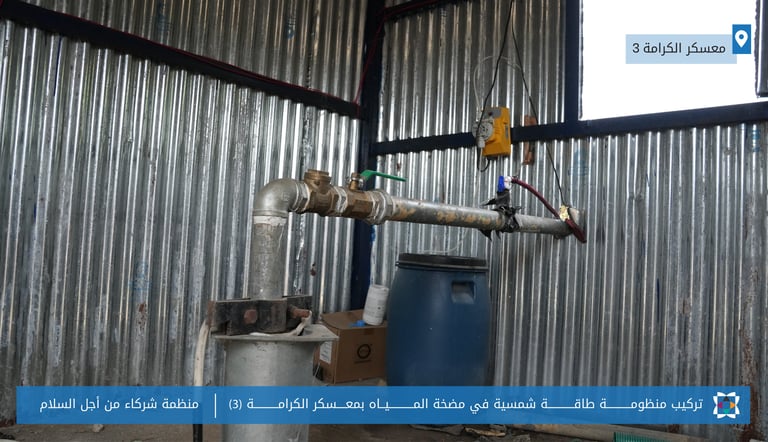
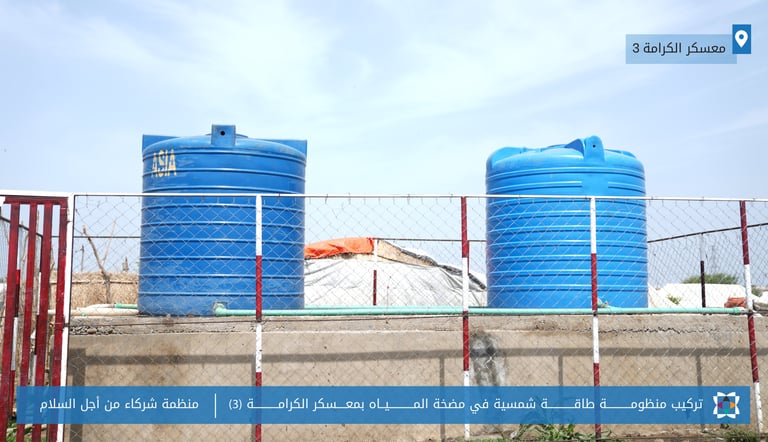
Through this grant, P4P implemented the installation of a solar power system to operate the water pump at IDP Camp No. 3, where the pump represents the camp's only source of water.
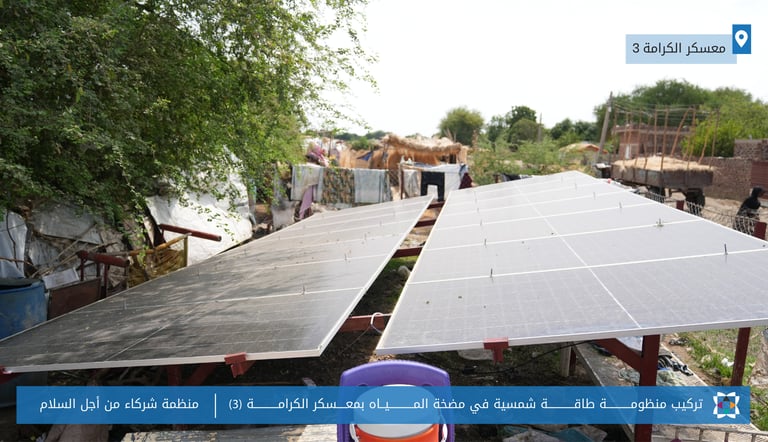
Prior to the intervention, the pump relied entirely on an unstable public electricity supply, resulting in frequent service interruptions. Consequently, camp residents had access to water for only a few hours each day, creating significant hardship for displaced families.
The solar energy system provided a sustainable solution by ensuring continuous operation of the pump throughout daylight hours. During the night, when the public electricity supply is generally more stable, the pump continues operating using the conventional power source. As a result, the camp now has reliable access to water throughout the day, significantly improving the availability of safe water for residents and reducing the daily burden associated with collecting water
Success Stories
One of the most meaningful indicators of the project's success came from a camp resident who jokingly remarked, "Today we'll finally be able to take a shower under running water." Although expressed humorously, the comment reflected a tangible improvement in the daily lives of camp residents and demonstrated the immediate positive impact of the intervention. Another important success emerged shortly after the solar system became operational. As the pump began operating at full capacity, the increased water pressure revealed several damaged water distribution hoses within the camp. While this initially appeared to be a technical issue, it served as an important early warning ahead of the upcoming rainy season, during which damaged water infrastructure could have contributed to water losses and increased public health risks. Based on these findings, P4P developed and submitted a follow-up intervention proposal aimed at rehabilitating the damaged water distribution network and strengthening the camp's water infrastructure before the onset of the rainy season.
Challenges Encountered
The primary challenge encountered during implementation was that the technical assessment revealed the need for a larger number of solar panels than originally anticipated. The additional panels required exceeded the budget allocated under the grant. P4P successfully addressed this challenge by coordinating with a local partner, who contributed the additional resources necessary to complete the installation without compromising the quality, functionality, or long-term effectiveness of the system.
Lessons Learned
Implementation of the project generated several important lessons that will inform future humanitarian interventions
2- Conducting comprehensive technical assessments before procurement is essential for accurately estimating technical requirements and minimizing implementation risks
3- Strong coordination and collaboration with local partners can effectively address unforeseen challenges and enhance project sustainability.
4- Humanitarian interventions can also serve as valuable assessment opportunities by identifying hidden weaknesses in essential infrastructure, enabling preventive action before these issues develop into larger emergencies.
5- Investing in renewable energy solutions for essential public services, such as water supply systems, can produce immediate humanitarian benefits while reducing dependence on unreliable electricity sources and improving service continuity.


We are the Partners for Peace Organization, working to deliver innovative, data-driven solutions aimed at creating sustainable change and transforming the lives of individuals and communities. We focus on promoting peace and development through effective strategies that contribute to making a positive impact on a large scale